Chapter 1
Her arms around my shoulders were heavy. Possessive and proud, the beaming woman in the pillbox hat and the five-year old girl were framed in the bushy, secluded back yard of our home.
The scratchy black and white photograph survived several marriages, many moves, and a lifetime of heartaches, but in this captured moment survival was far from her mind. She was still married to my birth father, thirty-five years old and full of dreams. She knew she had a place in the small society of neighbors and loggers that were our social circle in the Pacific Northwest in 1956.
Beside the mother and child is the stump of a dogwood tree ringed by daffodils. Beyond it, the pretty bush with the yellow flowers that mesmerized five year-old me. It was a forsythia bush, but at five years old I heard “For Cynthia”, for my pretty cousin Cindy, who was old enough to drive a car and have a boyfriend. That there was a bush named after her was proof positive she was special to the whole world, not just to me. Every one of my childhood dolls was named “Cindy” in her honor.
We lived in a three-bedroom bungalow on four acres in Chico, the rural outskirts of Bremerton, Washington.
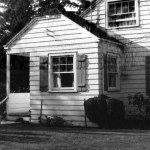
Our house in Chico
The old Navy town had bustled during Word War II despite the dreary curtain of rain that perpetually rides in from the Pacific and dumps over fifty inches of precipitation on it each year. During the war it was the duty, directly or indirectly, of every Bremertonian to contribute to the war effort. Rivets had to be driven, metal had to be fabricated, dry docks flooded or emptied. There are still remnants of the concrete tethering blocks and structures that held the barrage balloons that hovered during WWII. During the war, Mom said, dirigibles were anchored all over in case low-flying Japanese aircraft arrived to attack the shipyard. The strategy was to catch the enemy propellers in the mooring cables before they could reach the ammunition depot and blow up the town. In those times, renegade balloons trailed their cables, knocking out power lines and starting fires, wreaking havoc on both civilians and friendly aircraft. My property is one of many with buried chunks of concrete that once held the dirigibles in place.
Bremerton’s streets swelled with uniformed off-duty sailors, and civilian shipyard workers and their families. From the 1950s to the 1970s, the shipyard’s workforce ebbed and flowed with cold and not-so-cold wars. Then in 1985, our county’s first mall opened fire and ran downtown Bremerton out of town, leaving behind a town that, over 25 years later is still trying to recover, inhabited mostly by older folks whose kids left town as soon as they grew up.
My father’s contribution to the war was his sobriety. As a Navy Sea Bee, his construction battalion built an airstrip in the South Pacific when enemy aircraft attacked his ship. He scribbled off a letter to his mother from the jungle, saying he and his buddies had watched their ship burn. He came home saying he had a metal plate in his head, an injury not born out in his military records, and a serious drinking problem no one ever doubted.
My parents were married in 1950, a second marriage for each and a 15-year age difference between them. I was a November baby; my mother’s little present, wrapped in blankets and photographed under the Christmas tree when I was one month old.
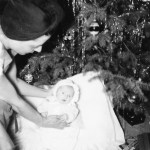
A tree and me
She was young and beautiful. My father was much more worn, between the war, hard drinking, and rough living in the great forests of Washington State, which he logged for thirty years, both before and after the war.
How I remember my Dad is in his trademark flannel shirts and baggy pants with suspenders, drinking beer with his buddies, holding court with big stories and even bigger punch lines, which he punctuated, cigarette wagging between his teeth, with a slap on the knee and a rousing, “Yowsee!” He made his living with a chainsaw and big talk, logging the wooded mountains from Port Angeles to Aberdeen and selling the logs to local pulp mills and ironically, to Japan.
I was propped on the ground in the burn tepee, alongside the beer-drinking loggers in a rusty metal cone where a fire burned hot in the center. I sat very still, afraid of becoming lost among the rough and tumble lumberjacks. What if Dad forgot me when he left?
The logging business enabled my parents to buy a small home on the edge of the woods on the outskirts of Bremerton. My knotty pine room ran alongside the attic that held the snuffboxes, army jackets, and bullet-holed helmets Dad stole off the bodies of dead Japanese soldiers – war mementos I tried to find 50 years later, but they were gone.
The same pink-shuttered house that held the horrors of war and piles of unpaid bills had a pond with a tiny creek that trickled from it to an ancient mossy water wheel before going under the highway and into Dyes Inlet.
One year we held a July 4th party. I sat on the small concrete bridge on the pond’s outfall and dangled my feet in the gurgling water. Nearby, the loggers drank, the wives gaggled with my mother, and the other kids played with Billy, but I closed my eyes and splayed my hands on the hot concrete, hearing only the aerie music of my creek.
Past the yard and out of site in the photograph is the forest—home of the maze of paths I created between the ages of five and eight. My paths wound through the ferns and nettles, around boulders, firs, and fallen logs. I dragged and rolled rocks to line my paths, which I swept with brooms of fern. It was my own green and quiet world where I built forts and houses, and where I hid when Dad, unshaven and reeking from whiskey, fought with Mom.
Sometimes I was the cause of the fights. Dad had a penchant for leaving me in the car outside the Hillside Tavern while he drank the afternoon away. I would roll down the windows and sit in the driver’s seat, pretending I was honking the horn. Out-out!
Those afternoons ended just before Mom got off work with the game “Tell Your Old Dad How to Get Home”. Mad mothers would not unite for another twenty-four years, so my angry mother was on her own to crusade for sober driving.
We never had an accident on the road, but Dad sometimes drove over the edge of the bank next to the garage and passed out beside me in the car. We’d hang dangerously in the blackberry bushes, gravity challenging the brambles to give way under our weight and drop us car and all onto the terrace below, near the pond. My job was to get the door open enough to climb out without disengaging the car from the stickers, and run to the neighbor’s house to tell them.
Pretty soon Mom would come home, bringing hell with her. I’d hide behind the bushes until it was over, peeking through the For Cynthia as Mom and the neighbors dragged his boneless form into the house, then I’d go stand by Dad and watch him snore off his drunk. The furnace ticked, Mom on the phone calling her sister, Billy in the yard. It was always the same. This, I understood.
 When he awoke, he’d reach for me, nuzzle my cheek with his razor-sharp beard, and call me “baby.” A sober child in the arms of a drunken father.
The shutters began to rattle, and those that should have stood guard just bent with the wind and leaned the other way.
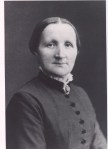
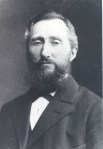
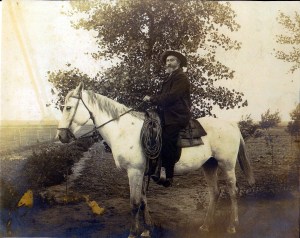 He let his horse lead the way up a rise, closer and closer to the clear blue Julesburg sky. Planting his feet on solid ground and turning in a slow circle, Peter saw forever across the golden grass. With his hat in his hand and his heart in his throat he spoke to the wind. Anna, he said, this is the place. I found America.
 Writer in the Forest
You must be logged in to post a comment.